

If you’re asking what size rug for queen bed layouts needs, start with an 8’ x 10’ size. It works well in most U.S. bedrooms and provides useful floor coverage. Smaller or larger rooms may need a different approach. A standard U.S. queen mattress measures about 60 inches wide and 80 inches long. Your bed frame may add several inches around that footprint. Always measure the complete frame before choosing floor coverings.
Queen Bed Rug Sizes at a Glance
| Bedroom situation | Suggested size | Typical placement | Best use |
|---|---|---|---|
| Small bedroom | 6′ x 9′ | Lower two-thirds of bed | Limited floor space |
| Average bedroom | 8′ x 10′ | Lower two-thirds or nearly full bed | Best general choice |
| Large bedroom | 9′ x 12′ | Full bed and possibly nightstands | Spacious primary bedrooms |
| Very tight room | Two runners | One beside each side | Apartments and narrow rooms |
| Decorative accent | 5′ x 8′ | Near the foot only | Accent rather than full coverage |
Quick answer: An 8′ x 10′ area rug is the safest choice for most queen bedrooms. Use 6′ x 9′ when floor space is limited. Choose 9′ x 12′ when you want wider coverage or nightstands resting on the same surface.
What Size Rug for Queen Bed Layouts Works Best?
An 8′ x 10′ floor covering gives most queen beds a balanced frame. It usually provides comfortable landing space beside the mattress. It also avoids overwhelming a typical medium-sized bedroom. The 10-foot dimension normally runs across the width of the bed. This orientation creates more visible material on both sides.
The shorter dimension then extends toward the footboard. Many designers aim for roughly 18 to 24 inches beside the sleeping area. That amount gives your feet a comfortable landing zone. It also helps the furniture arrangement look intentional. An 8′ x 10′ choice isn’t mandatory for every room. Tight spaces can work better with 6′ x 9′. Larger primary bedrooms often benefit from 9′ x 12′. Our white bedroom curtains guide shows how softer finishes can work with your floor covering.
Is an 8′ x 10′ Rug Big Enough for a Queen Bed?
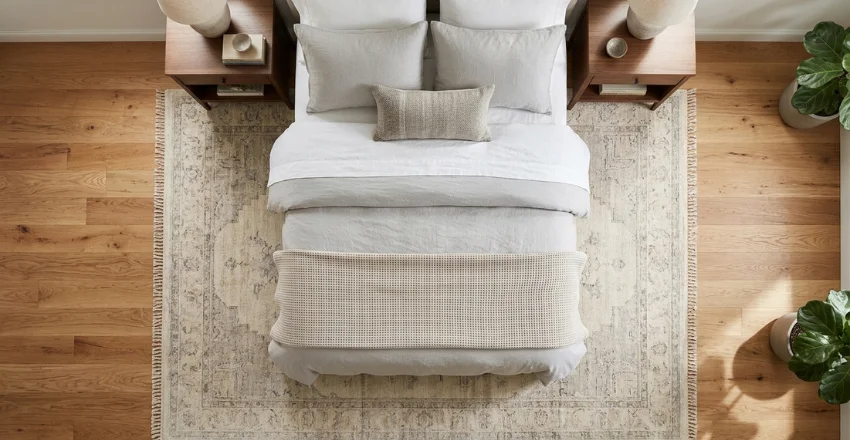
Yes, an 8′ x 10′ size works for most queen-bedroom arrangements. It offers enough width to extend beyond both mattress edges. The exact exposure depends on your frame and placement. For a popular arrangement, begin the floor covering below the nightstands. Let it extend beneath roughly two-thirds of the bed. This keeps the bedside tables directly on the floor. This placement also puts more material where your feet land each morning.
Less material remains hidden beneath the headboard. That can make your purchase feel more useful. An 8′ x 10′ option is especially practical in rooms around 11 by 12 feet or larger. Measure first because doorways and vents can reduce usable space. Wide bed frames can also change the final proportions.
When a 6′ x 9′ Size Makes More Sense
A 6′ x 9′ option can suit a smaller bedroom or apartment. It costs less than many larger floor coverings. It also leaves more visible flooring around the room. Placement becomes more important with this size. Start it farther down the bed instead of near the headboard. Focus coverage around the lower half and foot. Don’t expect a 6′ x 9′ piece to frame every part of a queen setup.
Wider frames may leave limited material beside the mattress. Nightstands will usually stay completely off it. Before buying, mark the proposed dimensions with painter’s tape. Walk around the bed and open every nearby door. This simple test catches spacing problems before they become expensive mistakes.
When to Choose a 9′ x 12′ Rug
A 9′ x 12′ floor covering suits larger bedrooms with generous open space. It creates a broad visual foundation around the sleeping area. It can also include more furniture within one defined zone. This size makes sense when both nightstands should sit on the same surface. It also works well with a bench near the footboard. The added width provides a more substantial border around larger frames. Avoid choosing 9′ x 12′ only because bigger sounds more luxurious.
An oversized piece can crowd doors, dressers, or heating vents. Good proportions matter more than maximum coverage. Measure the entire furniture grouping before ordering. Include the bed frame, bedside tables, and any bench. Then compare those dimensions with the available floor area.
Can You Use a 5′ x 8′ Rug Under a Queen Bed?
A 5′ x 8′ size is usually too narrow for traditional under-bed placement. A queen mattress alone is five feet wide. That leaves little useful material extending beyond either side. You can still use this size as an accent. Position it horizontally near the foot of the bed. Another option is placing it entirely beyond the footboard.
This arrangement works when comfort beside the bed isn’t your main goal. It can introduce color, pattern, or texture without covering much flooring. It may also suit rooms with attractive hardwood you want visible. For full side coverage, move up to a wider option. A 6′ x 9′ arrangement provides more flexibility. An 8′ x 10′ remains the stronger general choice.
How Far Should the Rug Extend Past the Bed?
Aim for about 18 to 24 inches of visible material beside the mattress when space allows. That range usually provides comfortable footing. It also creates a clear border around the bed. You can allow more exposure in a large primary suite. Smaller rooms may require a narrower visible border. Room proportions should guide the final decision.
The foot of the bed deserves similar attention. Leave enough material beyond the frame for comfortable walking. Add more length when a bench sits at the footboard. Use the mattress dimensions only as a starting point. Bed frames can be wider and longer than mattresses. Upholstered frames often add several inches on every side.
Three Common Placement Options
1. Place It Under the Lower Two-Thirds
This arrangement works well with 8′ x 10′ and 6′ x 9′ sizes. Nightstands remain on the hard flooring. The floor covering begins somewhere below the pillows. This placement concentrates softness where you walk most often. It also exposes more pattern near the foot. Installation is easier because you don’t have to move bedside furniture.
2. Put the Entire Bed on the Rug
Full coverage creates a stronger, more formal bedroom arrangement. It usually requires a larger floor covering. A 9′ x 12′ size often suits this approach. Check whether your nightstands will sit on or off the same surface. Mixed placement can make furniture feel uneven. Measure their combined width before choosing dimensions.
3. Use Runners Beside the Bed
Two runners offer a practical solution for narrow rooms. They provide softness exactly where your feet land. They also keep more of the existing floor visible. When possible, choose runners with similar dimensions on both sides. Align them with the mattress or bed frame. A nonslip pad can help keep each runner stable.
How to Measure Before You Buy
Don’t rely on mattress size alone when ordering. Measure the bedroom and every major piece of furniture. Then test the proposed footprint directly on the floor. Use this process:
1. Measure the outside width and length of your bed frame. 2. Measure the distance from the bed to nearby walls. 3. Record the width of both nightstands. 4. Include any bench placed near the footboard. 5. Mark possible dimensions with painter’s tape. 6. Open doors and drawers to check clearance. 7. Walk around the taped area before making your decision.
This process takes only a few minutes. It shows whether the chosen proportions feel comfortable. It can also reveal problems hidden by online room photos.
Don’t Forget the Rest of the Bedroom
Floor coverings work best when they support the wider bedroom design. Consider the colors, curtains, lighting, and bedding together. Repeating one or two tones can make the room feel connected. FJREO’s White Bedroom Curtains guide offers useful ideas for coordinating softer bedroom finishes. The site’s Lighting Tips for a Bright Home article can also help with room atmosphere. Browse the Home Improvement section for more decorating and household ideas. Texture matters as much as color. A thick pile adds softness but requires more cleaning. A lower pile usually makes furniture placement and vacuuming easier.
Common Queen-Bed Rug Mistakes
Buying too small is the most common sizing problem. A tiny piece can disappear beneath the furniture. It may also provide little usable softness beside the bed. Another mistake is forgetting the frame dimensions. Upholstered and platform beds often exceed the mattress footprint. Measure the complete furniture piece instead.
Poor orientation can also create awkward proportions. In common rectangular layouts, the longer dimension usually runs across the bed. Test both directions with tape if your room has unusual proportions. Finally, don’t block doors or vents. Floor coverings need comfortable clearance from moving doors. HVAC openings should also remain unobstructed.
FAQ
What size rug for queen bed setups is most common?
An 8′ x 10′ size is the most versatile choice for a typical queen bedroom. It provides useful coverage beside and below the mattress. A 9′ x 12′ rug works better in a spacious room.
Is a 6′ x 9′ rug too small for a queen bed?
No, but you need to plan placement carefully. It works best beneath the lower portion of the bed. Keep the nightstands off it for better proportions.
Should nightstands sit on the rug?
They don’t have to sit on it. Leaving nightstands off works well with lower two-thirds placement. Larger 9′ x 12′ options can include both bedside tables.
Which direction should the rug run under a queen bed?
For most rectangular sizes, place the longer side across the bed’s width. This gives more coverage beside the mattress. Your room shape may justify a different orientation.
Do I need a rug pad in a bedroom?
A rug pad can reduce movement and add cushioning. It can also help protect some flooring surfaces. Choose one slightly smaller than the floor covering itself.
The Best Choice for Most Bedrooms
For most U.S. homes, an 8′ x 10′ size offers the easiest balance. It provides useful coverage without dominating an average bedroom. A 6′ x 9′ or 9′ x 12′ size can be better in specific layouts. Measure your bed frame, nightstands, room boundaries, and walking paths before ordering. Mark the proposed footprint with painter’s tape. That quick check is more reliable than choosing from bed size alone. —