
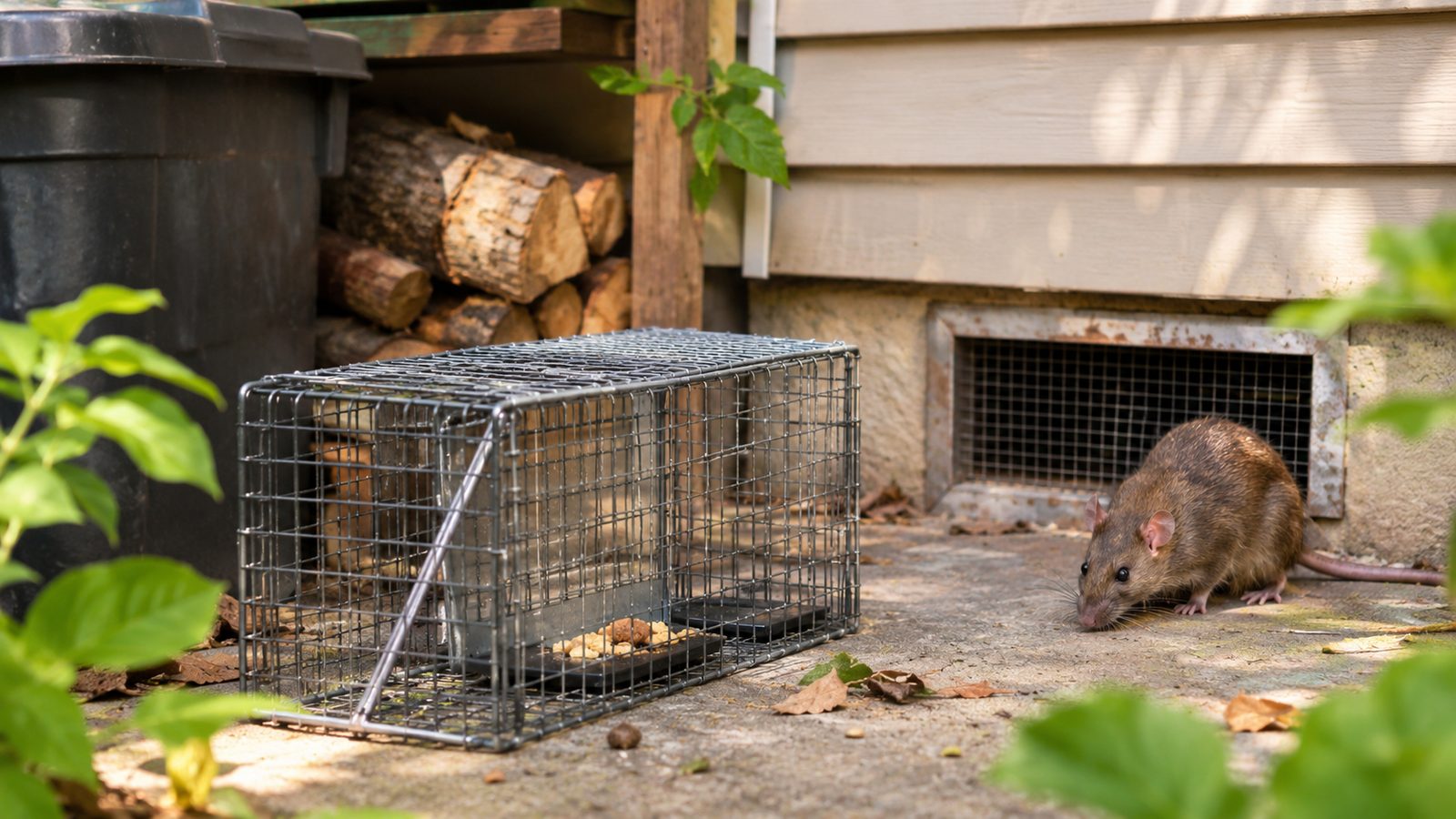
Finding rats in your home can create health concerns, property damage, and ongoing frustration. Effective rat removal starts with identifying their activity, choosing appropriate control methods, and closing the openings they use. US homeowners can often handle limited problems with careful trapping, sanitation, and exclusion. Pest control is also part of the wider responsibilities of homeownership. Larger infestations or difficult access points may require professional pest control.
Quick Facts About Rat Control
| Topic | What homeowners should know |
|---|---|
| Common warning signs | Droppings, gnaw marks, rub marks, scratching noises, and burrows |
| Common species | Norway rats and roof rats |
| First control option | Properly placed snap traps |
| Other options | Electronic traps and regulated bait stations |
| Entry-point prevention | Seal gaps around 1/2 inch and larger using gnaw-resistant materials |
| Food prevention | Secure garbage, pet food, birdseed, and stored groceries |
| Cleanup precautions | Ventilate, wear gloves, and disinfect droppings before removal |
| Professional assistance | Consider it for recurring activity, extensive contamination, or inaccessible nests |
Rat Removal: What Homeowners Should Do First
To remove rats, inspect your home for activity, identify likely entry points, and select suitable traps. Remove food and shelter sources, seal openings, and clean contaminated areas safely. Monitor the affected spaces for fresh evidence. Call a licensed pest professional when activity persists or the infestation involves difficult or hazardous areas.
Key Takeaways
- Look for several signs before deciding where to place traps.
- Identify whether you have Norway rats or roof rats.
- Position snap traps along established travel routes.
- Avoid exposing children, pets, and wildlife to rodenticides.
- Seal structural openings and maintain good sanitation.
- Follow CDC precautions when cleaning contaminated areas.
- Seek professional help when DIY control isn’t sufficient.
1. Recognize the Signs of a Rat Infestation
Rats often leave physical evidence before homeowners see them. Checking likely hiding places helps you understand where activity is concentrated. Inspect kitchens, basements and storage areas, garages, attics, and crawl spaces. Watch for these common warning signs:
- Droppings: Dark, elongated droppings near food containers, appliances, cabinets, and nesting areas.
- Gnaw marks: Chewed packaging, wood, plastic containers, insulation, and electrical wiring.
- Rub marks: Dark, greasy streaks along baseboards, pipes, walls, and frequently used openings.
- Noises: Scratching, scurrying, or gnawing sounds inside walls, ceilings, and attics, especially at night.
- Burrows: Openings in soil near foundations, sheds, garbage areas, and landscaping.
- Nesting materials: Shredded paper, insulation, fabric, and other materials collected in sheltered spaces.
Fresh droppings and newly damaged packaging can indicate continuing activity. Older evidence alone doesn’t establish whether rodents remain inside. Record where you find each sign before choosing control locations.
2. Identify Norway Rats and Roof Rats
Two common species found around US homes are Norway rats and roof rats. Their habits differ, so identifying the likely species helps you inspect the correct areas. Pay attention to body shape, climbing behavior, and nesting locations.
| Feature | Norway Rat | Roof Rat |
|---|---|---|
| Body shape | Stocky and heavy | Slim and agile |
| Typical color | Brown or grayish brown | Usually dark brown or black |
| Tail | Generally shorter than head and body | Generally longer than head and body |
| Common nesting areas | Burrows, basements, and lower levels | Attics, trees, upper walls, and roof spaces |
| Climbing behavior | Usually stays near ground level | Excellent climber |
| Common outdoor signs | Burrows near foundations | Activity in trees and elevated structures |
Where Norway Rats Usually Hide
Norway rats commonly establish nests in underground burrows. Check beneath outdoor debris, near foundations, and around garbage storage areas. Indoors, inspect basements, lower cabinets, and spaces behind appliances.
Where Roof Rats Usually Hide
Roof rats favor elevated areas and can climb along pipes, branches, and utility routes. Inspect attic spaces, roof edges, upper cabinets, and overhead structures. Also check vegetation touching the house because it can provide access routes.
3. Choose the Right DIY Trapping Method
Trapping can help homeowners address limited rodent activity. The right choice depends on the location, household safety needs, and accessibility. Always follow the manufacturer’s directions and keep traps away from children and pets.
| Trap type | Advantages | Limitations |
|---|---|---|
| Snap traps | Direct mechanical control and straightforward inspection | Require careful placement and regular checking |
| Electronic traps | Enclosed design and convenient disposal on some models | Require batteries or electrical power |
| Bait stations | Contain rodenticide within a protective enclosure | Poison exposure remains possible if products are misused |
Snap Traps
Snap traps are a practical starting point for many homeowners. Place them along walls where droppings, rub marks, or gnawing indicate regular movement. Position the trigger end close to the wall, following the trap manufacturer’s instructions. Choose traps designed for rats rather than smaller mice. Use a small amount of suitable bait and check each trap regularly. Never leave an exposed trap where children or household pets can reach it.
Electronic Traps
Electronic traps use an electrical mechanism to kill rodents inside an enclosed chamber. Some models include indicators that show when the trap needs attention. Follow the manufacturer’s placement, cleaning, and battery instructions. These devices may suit households that prefer enclosed equipment. Their effectiveness depends on correct placement and whether rats investigate the device. Keep them inaccessible to children and pets.
Bait Stations
Bait stations hold rodenticide inside an enclosure designed to reduce accidental access. They require careful placement and strict compliance with product labeling. Never leave loose poison scattered around floors, yards, or storage spaces. Tamper-resistant stations are essential around children and pets. Choose products approved for the intended setting and follow all label directions. The EPA’s rodenticide guidance explains consumer restrictions and protective requirements.
4. Understand Why Loose Rat Poison Is Risky
Loose poison can expose children, pets, and non-target wildlife to dangerous chemicals. A pet or wild animal may also become poisoned after eating a rodent that consumed bait. This secondary poisoning risk makes careless bait placement especially concerning. The EPA restricts consumer access to certain second-generation anticoagulant rodenticides. Consumer products cannot contain the four restricted active ingredients covered by these rules. Some products containing these chemicals remain available for professional use under applicable requirements. Homeowners should follow these precautions:
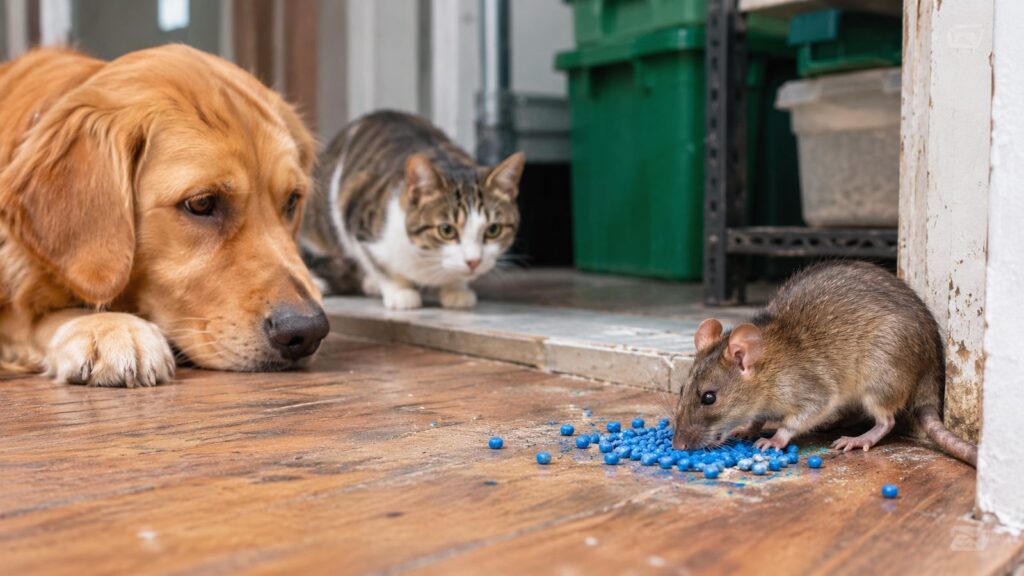
- Never scatter loose rodenticide around the property.
- Use only appropriately registered consumer products.
- Keep bait secured inside its supplied protective station.
- Store pesticides away from food, children, and pets.
- Follow the product label for placement and disposal.
- Remove dead rodents promptly and dispose of them appropriately.
Avoid assuming that a bait station makes every poison product harmless. Protective enclosures reduce certain exposure risks but don’t eliminate them. If a pet may have contacted bait or a poisoned rodent, contact a veterinarian promptly.
5. Seal Entry Points and Prevent New Activity
Trapping addresses rodents already inside, but exclusion helps prevent additional animals from entering. Inspect the entire building rather than focusing only on the room where you found droppings. Rats can use openings around foundations, rooflines, plumbing, wiring, and ventilation areas. Pay particular attention to:
- Gaps around water pipes and electrical cables.
- Openings near foundation walls and basement windows.
- Damaged screens and crawl-space vents.
- Gaps beneath exterior doors and garage doors.
- Openings around roof edges and utility connections.
- Damaged soffits, fascia boards, and roof vents.
Seal openings approximately 1/2 inch and larger as a minimum inspection priority. Check smaller cracks too, since rodents may exploit surprisingly narrow openings. Use materials that resist gnawing rather than relying on ordinary expanding foam alone. Suitable exclusion materials include:
- Steel wool: Useful for filling small gaps when secured properly.
- Hardware cloth: Heavy metal mesh for larger openings and ventilation areas.
- Metal flashing: Useful for protecting vulnerable edges and structural openings.
- Appropriate sealants or mortar: Helpful when combined with gnaw-resistant barriers.
Check the finished repairs for loose edges and remaining gaps. Pay attention to roof access because roof rats can travel along branches and overhead structures. Keep vegetation trimmed away from the building where practical.
6. Improve Sanitation Around Your Home
Food, water, and sheltered nesting locations can encourage rodents to remain near a property. Removing these resources supports trapping and exclusion. Make sanitation part of your regular household maintenance rather than a one-time activity. Use these practical measures:
- Store dry foods in sealed, rodent-resistant containers.
- Keep garbage inside containers with secure lids.
- Clean food spills and crumbs promptly.
- Avoid leaving pet food outdoors overnight.
- Secure birdseed and animal feed.
- Remove fallen fruit and garden debris.
- Repair leaking outdoor faucets and plumbing.
- Reduce clutter in garages, sheds, and storage rooms.
- Keep firewood and stored materials away from exterior walls.
Check kitchens and pantries for damaged food packaging. Discard contaminated food instead of trying to salvage it. Clean storage areas regularly so new droppings and damage become easier to spot.
7. Clean Rat Droppings and Nesting Materials Safely
Rodent droppings and urine can expose people to disease-causing organisms. Cleaning them incorrectly can release contaminated particles into the air. The CDC provides specific precautions for residential rodent cleanup.
Follow These CDC Cleanup Steps
- Ventilate the space. Open doors and windows for 30 minutes before cleaning enclosed areas. Leave the room or building during this period.
- Put on gloves. Wear rubber or plastic gloves before handling contaminated materials.
- Prepare disinfectant. Use an appropriate household disinfectant or freshly prepared bleach solution. The CDC specifies one part bleach to nine parts water.
- Wet the droppings. Spray contaminated material until thoroughly wet. Allow it to soak for five minutes or follow the disinfectant label.
- Wipe everything up. Use paper towels to collect droppings, urine, and cleaning solution.
- Dispose of waste. Place used paper towels in a covered garbage container.
- Disinfect surfaces. Mop or sponge affected hard surfaces using an appropriate disinfectant.
- Wash your hands. Clean gloved hands before removing gloves, then wash your hands with soap and water.
Never sweep or vacuum dry rat droppings, urine, or nesting materials. These actions can send contaminated particles into the air. The CDC warns that breathing contaminated air can spread rodent-related diseases. The CDC lists the 30-minute ventilation period and the one-to-nine bleach mix in its guide to cleaning up after rodents, so read it before beginning cleanup. Extensive contamination, exposed insulation, or inaccessible nesting areas may require professional assistance.
8. Know When to Call a Professional
DIY measures may be suitable for limited activity in accessible areas. Professional assistance becomes more useful when rodents continue appearing despite careful trapping and exclusion. A qualified pest control company can inspect less accessible areas and recommend a coordinated treatment plan. Consider calling a professional when:
- You hear repeated movement inside walls or ceilings.
- Fresh droppings continue appearing after trapping.
- You find several burrows around the property.
- Rodents have damaged electrical wiring or insulation.
- You discover extensive nesting materials.
- Rats have entered ventilation or HVAC systems.
- You cannot safely reach the suspected nesting area.
- Household children or pets make DIY treatment difficult.
Ask the company about inspection procedures, trapping methods, exclusion repairs, and follow-up visits. Request an itemized estimate before approving the work. Confirm licensing requirements and insurance where applicable in your state or locality.
What Affects Professional Rat Removal Costs?
Professional pricing varies across the United States. The size of the infestation, property layout, access conditions, and required repairs can change the final estimate. A basic trapping visit is different from a project involving attic cleanup and extensive structural exclusion. Ask whether the proposed price includes:
- Initial inspection and activity assessment.
- Trap installation and monitoring.
- Removal of accessible rodents.
- Entry-point identification and sealing.
- Contaminated-material cleanup.
- Follow-up inspections and additional visits.
There is no single price that applies to every US home. Compare written estimates based on the actual work included, not the lowest advertised starting price. This makes it easier to understand what you’re paying for.
9. Monitor Your Home After Treatment
A completed trapping visit doesn’t automatically mean every entry point has been addressed. Continue inspecting the areas where you previously found evidence. Look for fresh droppings, gnaw marks, damaged food containers, and renewed scratching sounds. Keep traps in appropriate locations while activity continues. Check them according to their instructions and maintain secure food storage. If new signs appear, investigate the source rather than repeatedly placing traps without repairing access points. A simple monitoring log can help you identify patterns:
| Inspection area | What to check |
|---|---|
| Kitchen | Droppings, food damage, and cabinet openings |
| Basement | Burrows, pipe gaps, and wall activity |
| Attic | Scratching sounds, nests, and roof openings |
| Garage | Door gaps, stored food, and gnaw marks |
| Yard | Burrows, fallen fruit, and uncovered garbage |
| Exterior walls | Rub marks, damaged vents, and entry gaps |
Consistent monitoring helps you recognize recurring problems early. Keep records of repairs, trap locations, and new evidence. Share these details with a professional if additional treatment becomes necessary.
Frequently Asked Questions
How do I know if I have rats in my house?
Look for droppings, gnaw marks, greasy rub marks, scratching sounds, and damaged food packaging. Burrows near foundations can indicate outdoor activity. Multiple signs in one area can help identify likely travel routes.
What is the safest DIY method for rat removal?
Properly selected and positioned snap traps are a practical starting point for many homeowners. Keep traps inaccessible to children and pets, and check them regularly. Combine trapping with exclusion and sanitation to address the conditions attracting rodents.
Should I use poison or snap traps?
Snap traps avoid introducing rodenticide into the environment and allow direct monitoring. Poison bait carries additional risks for pets, children, and wildlife. If bait is necessary, use an appropriately labeled product in its required protective station.
Can rats enter through small holes?
Yes, rats can exploit openings that appear insignificant during a casual inspection. Seal gaps around 1/2 inch and larger as a minimum priority, and inspect smaller cracks around pipes, vents, and foundations. Use gnaw-resistant materials for lasting repairs.
How long does it take to get rid of rats?
The time required depends on the infestation, trap placement, available food, and access points. Some rats may avoid unfamiliar traps initially. Continue monitoring and adjust the control plan when fresh evidence remains.
Is rat droppings cleanup dangerous?
Dry droppings and urine can create exposure risks when contaminated particles become airborne. Never sweep or vacuum them before disinfection. Follow the CDC’s ventilation, glove, wet-cleaning, and disposal instructions.
When should I hire a rat control professional?
Contact a professional when activity continues, contamination is extensive, or rodents occupy inaccessible spaces. Professional assistance is also advisable when wiring, insulation, or ventilation systems show signs of damage. Ask for an inspection and written treatment plan.
Final Thoughts
Effective rat control requires more than setting a few traps. Homeowners should combine careful inspection, appropriate trapping, structural exclusion, and consistent sanitation. Safe cleanup also matters because contaminated droppings and nesting materials can expose household members to health risks. Start by identifying where rodents travel and how they enter your property. Choose control methods that protect children, pets, and wildlife. If the activity continues or the affected areas are difficult to access, request an assessment from a qualified pest control professional. —