
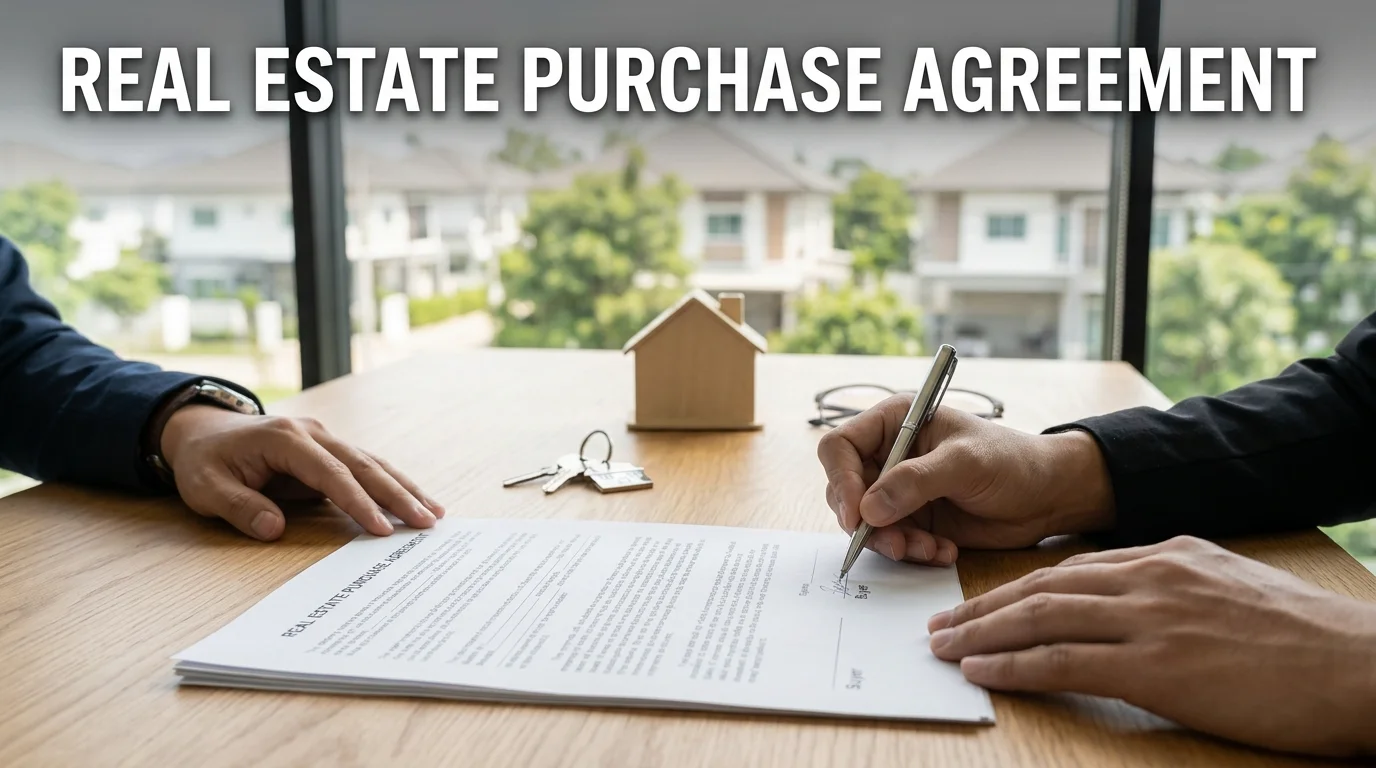
A real estate purchase agreement is the contract that sets the terms for buying or selling property. It identifies what each party must do before the sale can close. Once both sides sign, those terms can create binding legal obligations.
The document usually covers price, financing, deposits, contingencies, title matters, and closing dates. Requirements can vary significantly by U.S. state. Buyers and sellers should review the actual state-specific form before signing.
Direct answer: A home purchase contract records the buyer’s and seller’s agreed terms for a property sale. It normally covers the price, earnest money, financing, inspections, appraisal, title, closing, possession, and other negotiated conditions. Signing does not itself transfer ownership, because the deed completes that transfer at closing.
Key Facts at a Glance
| Topic | What it usually means |
|---|---|
| Purpose | Records the agreed terms of a property sale |
| Main parties | Buyer and seller |
| Common contents | Price, deposit, financing, contingencies, closing, possession |
| Earnest money | Good-faith funds handled according to the contract |
| Common contingencies | Financing, inspection, appraisal, title, home sale |
| Binding point | Usually after required parties sign and acceptance occurs |
| Ownership transfer | Normally occurs through the deed at closing |
| State differences | Forms, clauses, procedures, and legal requirements vary |
| Professional help | Agents or attorneys may prepare or review documents under state law |
What Does a Real Estate Purchase Agreement Include?
A real estate purchase agreement should clearly identify the parties, property, price, and major transaction terms. Most forms also address deposits, deadlines, included property, and closing responsibilities. Some transactions need additional riders, disclosures, or addenda.
The National Association of REALTORS® encourages clear written agreements describing the parties’ specific conditions and obligations. NAR also advises providing each party with a copy after signing or initialing. State rules can impose additional requirements beyond those professional standards.
The following nine areas deserve close attention before anyone signs.
1. Buyer, Seller, and Property Information
The contract should identify the buyer and seller accurately. It should also identify the property without creating ambiguity. Many contracts contain both a street address and a formal legal description.
An incorrect legal name or property description can create problems later. Buyers should compare property information with title or transaction records. Sellers should also confirm that every required owner appears correctly.
2. Purchase Price and Payment Terms
The agreed sale price is one of the contract’s central terms. The document should explain how the buyer expects to fund the purchase. Cash purchases and financed purchases can create different contractual obligations.
A financed offer may identify the expected loan type or financing conditions. Those details matter because financing problems can affect whether the transaction continues. Buyers should avoid promising funding terms they cannot reasonably meet.
3. Earnest Money Deposit
Earnest money shows that a buyer intends to proceed under the agreed contract. The money is typically held by a neutral party or escrow agent. The contract states when the funds must be delivered and how they are handled.
Whether a deposit is refundable depends heavily on the contract. Contingencies and notice deadlines can determine the outcome. Missing a contractual deadline can sometimes put the deposit at risk.
4. Financing Contingency
A financing contingency can protect a buyer who needs a mortgage. Its exact protection depends on the wording and applicable deadlines. Buyers should understand what financing events allow termination.
For example, a contract may permit withdrawal when required financing cannot be obtained. The buyer usually must follow the contract’s notice procedures. Simply deciding that financing feels expensive may not satisfy the clause.
5. Inspection and Due-Diligence Terms
An inspection contingency can give buyers time to evaluate a property’s physical condition. The clause may permit further negotiation after problems appear. Depending on the wording, it may also allow termination.
Inspection rights should be reviewed together with their deadlines. Waiting too long can weaken protections contained in the contract. Freddie Mac describes contingencies as contractual conditions that may allow buyers to change or end a transaction.
6. Appraisal and Value Protection
An appraisal contingency can matter when a mortgage lender requires an appraisal. Problems can arise when the appraised value falls below the agreed price. The contract determines what options remain available.
Possible outcomes include renegotiation, additional buyer funds, or termination under an applicable contingency. No single result applies to every transaction. The exact language and state rules control the parties’ rights.
7. Title and Ownership Issues
Title provisions address the seller’s ability to transfer acceptable ownership rights. A title review may uncover liens, competing claims, or other problems. The contract can explain how identified defects must be handled before closing.
A purchase contract is not the same document as a deed. The deed formally transfers property ownership from seller to buyer. That transfer normally occurs at closing.
8. Closing, Possession, and Included Property
The contract should establish a target closing date. It should also address when the buyer receives possession. Those dates are not always identical.
Included fixtures and personal property should be described clearly. Without specific wording, appliances, furniture, or other items can become disputed. Clear exclusions can prevent disagreements during the final walkthrough.
9. Default, Cancellation, and Remedies
A contract should explain what happens when either party fails to perform. Consequences may include deposit disputes, damages, termination rights, or other remedies. The available options depend on the contract and state law.
This section deserves careful professional review because default provisions carry real consequences. Buyers and sellers should not assume that cancellation is automatically penalty-free. A local real estate attorney can explain provisions requiring legal interpretation.
Why Contingencies Matter So Much
Contingencies set clear conditions that must be met during the transaction. Common examples involve financing, inspections, appraisals, title, or selling another property. They provide an agreed path to address problems before closing.
Removing contingencies can make an offer appear simpler to a seller. It can also remove important contractual protections for the buyer. The practical tradeoff should be evaluated before deadlines or rights are waived.
Seller-paid costs or credits may also affect negotiations. FJREO explains how these incentives can help bridge buyer-seller differences. See the site’s guide to real estate concessions for related negotiation considerations.
What Happens After Both Parties Sign?
After both parties sign, the property generally moves into the contract-to-closing stage. Required deposits, inspections, financing, appraisal, and title work can follow. Each task must meet the deadlines written into the contract.
Closing typically occurs only after required conditions are met. Freddie Mac notes that mortgage closings often occur about 30 to 45 days after an accepted offer. Actual timing varies with the loan, property, contract, and location.
The buyer should also plan for responsibilities that continue after closing. Insurance and long-term property finances can become important immediately. FJREO’s homeownership and financial strategies guide discusses related planning considerations.
Can a Buyer Back Out After Signing?
A buyer may be able to cancel if the contract gives them a valid right to do so. Common examples include inspection, financing, appraisal, or title contingencies. The buyer usually must act within the relevant deadline.
Backing out without a contractual basis can have financial consequences. A buyer may risk some or all earnest money. Other remedies can depend on state law and the agreement’s default provisions.
A seller’s right to terminate can also be limited after signing. Sellers generally cannot assume they may accept a better offer without consequences. Anyone considering cancellation should review the contract promptly with a qualified local professional.
Who Prepares the Contract?

The answer depends partly on the state and transaction. Real estate agents often work with approved or standardized residential forms. Attorneys may prepare or review agreements when legal involvement is appropriate.
Buyers and sellers remain responsible for understanding what they sign. A standardized form can still contain important elections, deadlines, and negotiated clauses. Complex transactions may require custom language rather than simple form completion.
FJREO’s real estate section contains related content about purchasing, ownership, negotiations, and property decisions. Readers can use those resources for broader background. For legal questions about a specific contract, consult an appropriate professional.
Purchase Agreement, Deed, and Buyer Agreement Are Different
These documents perform different jobs during a transaction. The home sale contract records the buyer’s and seller’s promises. The deed transfers ownership.
A buyer representation agreement serves a different purpose. It sets the relationship between the buyer and the real estate professional. NAR distinguishes that agreement from the purchase contract between buyer and seller.
Confusing the documents can lead to incorrect assumptions about legal rights. Buyers should ask which agreement they are reviewing before signing. They should also keep copies of every executed document.
A Practical Pre-Signing Checklist
Before signing, review the entire contract, not just the price. Pay particular attention to dates because many contractual protections expire. Ask questions before accepting language you do not understand.
Use this checklist as a starting point:
- Confirm every buyer and seller name.
- Verify the property address and legal description.
- Check the exact purchase price.
- Confirm earnest money amount and deadline.
- Review financing requirements.
- Review inspection rights and dates.
- Check appraisal protections.
- Understand title requirements.
- Confirm included and excluded property.
- Verify the closing and possession dates.
- Review cancellation and default clauses.
- Identify every required disclosure and addendum.
- Confirm how notices must be delivered.
- Get professional advice on unclear legal terms.
Do not treat an online checklist as a substitute for state-specific advice. Residential contracts vary across the United States. The safest review considers the actual form, property, jurisdiction, and negotiated terms.
Frequently Asked Questions
Is a real estate purchase agreement legally binding?
It generally becomes binding when the necessary parties properly sign and acceptance occurs under applicable law. Its terms then control many responsibilities leading toward closing. State law and the contract determine the precise effect.
Does signing the contract mean the buyer owns the house?
No. Signing establishes contractual obligations, but it does not itself transfer the property’s title. Ownership is formally transferred through the deed as part of closing.
Can the contract be changed after signing?
Changes may be possible when the required parties agree to them. Those changes should be documented using the appropriate written amendment or related instrument. Informal verbal changes can create avoidable disputes.
Does a purchase contract need to be notarized?
A residential purchase contract generally is not notarized merely to create the buyer-seller agreement. Requirements can still differ by jurisdiction and document type. Deeds and other closing documents may have separate notarization requirements.
What happens to earnest money if the buyer cancels?
The result depends on the contract and reason for cancellation. A valid contingency may permit the buyer to recover the deposit. Cancellation outside contractual rights can place those funds at risk.
Review the Terms Before You Commit
A home sale contract does much more than record an agreed price. It determines deadlines, protections, responsibilities, and possible consequences for both sides. Careful review can prevent avoidable surprises before closing.
Buyers and sellers should use the correct form for their state and transaction. They should ask questions about unclear clauses before signing. A qualified local attorney may be appropriate when rights or obligations are uncertain.
This article provides general U.S. real estate information and is not legal, tax, or financial advice. Laws and standard forms differ by state. Consult qualified professionals for guidance about your transaction.