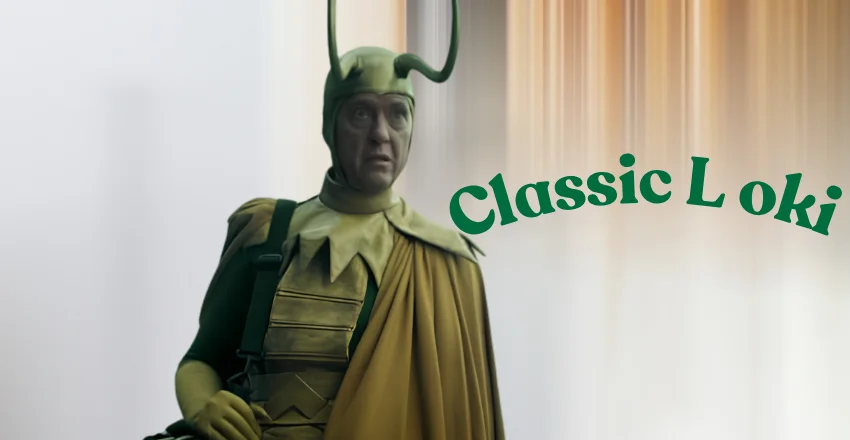
Classic Loki is one of the most memorable variants introduced in Marvel Studios’ Loki. Richard E. Grant plays this older God of Mischief with surprising warmth and humor. His brief appearance also reveals how powerful a Loki can become through illusion magic.
Classic Loki at a Glance
| Key fact | Details |
|---|---|
| Character | An older Loki variant from an alternate timeline |
| Actor | Richard E. Grant |
| MCU debut | Loki Season 1 |
| Main episode | “Journey Into Mystery” |
| Signature look | Green suit, yellow cape, large horned helmet |
| Main ability | Advanced illusion and projection magic |
| Important relationship | Thor remains emotionally important to him |
| Fate | Sacrifices himself while distracting Alioth |
| Costume inspiration | Loki’s early Marvel Comics appearance |
| Major theme | A Loki can change, care, and choose courage |
Quick answer: This character is an older Loki variant who survived Thanos by using an illusion instead of fighting directly. He later lived alone for years before the TVA found him. His final act against Alioth proves his extraordinary magical ability and gives the main Loki an important example of personal change.
Key Takeaways
- Richard E. Grant portrays the older variant in Marvel Studios’ Loki.
- He claims he survived Thanos by creating a convincing projection.
- His strongest skill is illusion magic rather than physical combat.
- His costume deliberately recalls Loki’s earliest comic-book design.
- He ultimately helps Loki and Sylvie confront Alioth.
- His sacrifice reinforces the series’ theme that people can change.
Who Is Classic Loki in the MCU?
Classic Loki is a variant whose life followed a different path from the Loki audiences already knew. He encountered Thanos, but he avoided the death seen in Avengers: Infinity War. Instead, he created an illusion so convincing that Thanos believed he had died.
He then hid himself from the larger universe for an extremely long period. Isolation eventually became difficult because he still missed his brother, Thor. When he tried to leave that isolation, the Time Variance Authority detected his deviation.
That history gives the character a different personality from Tom Hiddleston’s younger version. He seems tired, cautious, and less interested in ruling anyone. Years of reflection have changed what he wants from life.
Classic Loki’s Backstory and Survival Against Thanos
The character offers one of the series’ most interesting alternate outcomes for Infinity War. The familiar MCU Loki tries to attack Thanos directly and dies during the attempt. This older variant says he took a much different approach.
He explains that he created a detailed projection of himself during the confrontation. He then disguised himself as debris and escaped without attracting attention. Marvel head writer Michael Waldron described the idea as a thought experiment about Loki surviving that encounter.
That survival also changes how viewers can interpret Loki’s magical abilities. Tricks that often seemed theatrical suddenly become practical survival tools. The story suggests patience and deception can sometimes outperform direct aggression.
Readers interested in more Asgardian MCU connections can also see FJREO’s profile of Ray Stevenson. Stevenson portrayed Volstagg across several Thor films. His career offers another connection to Marvel’s onscreen Asgard.
How Powerful Is Classic Loki?
His most impressive power is large-scale illusion magic. During the confrontation with Alioth, he creates an enormous image of Asgard. The projection appears solid enough to attract the creature’s full attention.
The scale makes this moment different from most earlier illusions shown in the MCU. He recreates buildings across an enormous area while maintaining the projection under pressure. The feat suggests years of practice substantially improved his magical control.
His abilities also help explain how he escaped Thanos without winning a physical fight. He does not overpower stronger enemies through brute force. He survives by controlling what those enemies believe they are seeing.
This approach fits Loki’s traditional identity as a trickster. Yet the older version has refined deception into something more disciplined. His magic becomes both a defensive skill and a tool for protecting others.
Why His Costume Looks So Different
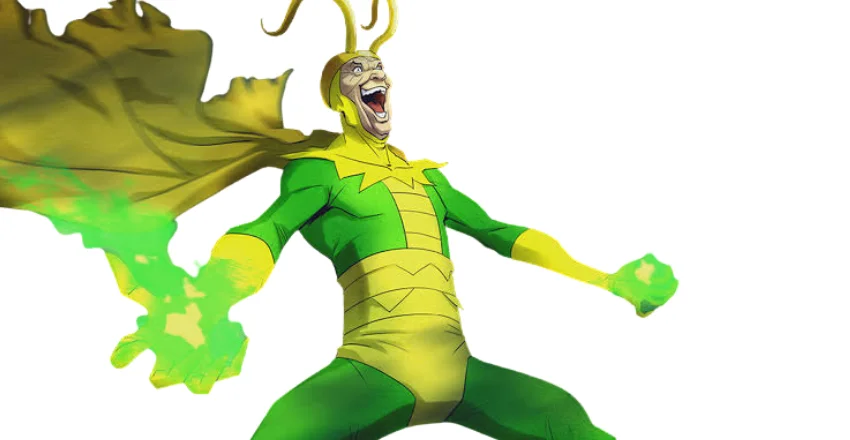
The bright green clothing and oversized yellow elements are intentional. Costume designer Christine Wada said the production referenced early Loki comics when creating the design. Some vintage fabric was also used to help produce an older comic-inspired appearance.
That visual direction explains why the outfit differs from the darker costumes associated with Tom Hiddleston. Early Marvel artwork often gave Loki brighter colors and much larger horns. The television costume translates that older superhero style into live action.
Richard E. Grant’s outfit therefore works as more than a visual joke. It connects the television character with decades of Marvel publishing history. The exaggerated design instantly identifies him as a version rooted in an earlier era.
The look has also become popular with cosplayers because its major pieces are easy to recognize. Common recreations use a green bodysuit, yellow cape, yellow accessories, and horned helmet. Costume guides frequently emphasize those elements when recreating the character.
Classic Loki vs. the Main MCU Loki
| Feature | Older variant | Main MCU version |
|---|---|---|
| Personality | Reflective and cautious | Ambitious, emotional, increasingly compassionate |
| Approach to danger | Avoidance and illusion | Mix of magic, combat, and improvisation |
| Costume | Bright green and yellow | Darker green, black, and gold |
| Major motivation | Survival and eventual connection | Identity, freedom, and relationships |
| Experience | Lived for an exceptionally long period | Younger and still changing |
| Defining magical feat | Massive Asgard projection | Broad range of illusions and enchantment-related abilities |
Both versions share intelligence, pride, magical talent, and complicated feelings about family. Their experiences lead them toward different choices. Those differences make the older version useful to the main character’s development.
The MCU regularly uses alternate characters to explore different outcomes from familiar decisions. Marvel fans who enjoy other unconventional heroes can browse FJREO’s coverage of the Deadpool game. The site also maintains a broader Entertainment section for film and television topics.
Why the Older Variant’s Sacrifice Matters
The older variant initially believes Lokis are destined to betray others and remain alone. His own history appears to support that belief. Yet watching the younger Loki cooperate with Sylvie gives him another possibility.
He eventually returns while Loki and Sylvie are struggling against Alioth. His enormous Asgard illusion gives them the distraction needed to continue their plan. The decision transforms his greatest trick from self-preservation into self-sacrifice.
That change gives the scene its emotional power. The same magical talent that once helped him hide now helps other people survive. His final choice directly contradicts his earlier belief that every Loki must remain selfish.
The moment also gives the main Loki evidence that identity is not fixed. A variant can reject patterns that seemed unavoidable for years. That lesson supports one of the central themes running through the series.
What Does “Glorious Purpose” Mean in His Final Scene?
“Glorious purpose” has followed Loki since his earliest MCU appearances. Earlier uses often reflected ambition, entitlement, or a desire for power. The phrase gains a different meaning during the older variant’s final stand.
His purpose is no longer domination. He chooses to help someone else despite knowing the danger. The phrase therefore becomes connected with courage rather than personal conquest.
That change also gives long-time MCU viewers a familiar phrase with a different emotional meaning. It closes the character’s brief story while reinforcing his growth. His purpose becomes glorious because it finally benefits others.
Is Classic Loki From the Marvel Comics?
The exact television variant was created for the MCU series. However, his appearance directly draws from Loki’s early Marvel Comics designs. The green costume, yellow cape, and dramatic horns intentionally recall that older artwork.
The comics contain many versions and interpretations of Loki across decades of stories. The television series does not simply reproduce one specific comic storyline. Instead, it combines classic visual ideas with an original alternate history.
That choice makes the character understandable even for viewers who never read the comics. Comic readers still receive an obvious visual reference. Newer MCU audiences receive a complete character with his own emotional arc.
Why the Character Became a Fan Favorite
Richard E. Grant gives the character a theatrical presence that matches the exaggerated costume. He can appear funny during one scene and deeply tired during another. That contrast keeps the variant from becoming a simple parody.
His storyline is also unusually efficient. Viewers learn his survival story, regrets, magical potential, and worldview within limited screen time. His final decision then resolves several of those ideas at once.
The massive Asgard illusion gives the character a memorable visual moment before his exit. More importantly, the scene gives that spectacle a clear emotional purpose. It explains why his brief appearance remains important to the season.
Frequently Asked Questions About the Older Variant
Who plays Classic Loki?
Richard E. Grant plays the older variant in Marvel Studios’ Loki. Grant appears wearing the bright costume inspired by older Marvel artwork. His performance mixes humor, regret, confidence, and emotional restraint.
How did he survive Thanos?
He says he projected an illusion that made Thanos believe he had been killed. He then concealed himself and escaped by drifting away from the scene. The alternate survival story became the foundation for his later timeline.
Why did the TVA arrest him?
He lived quietly for years without creating a major timeline disturbance. Eventually, loneliness led him to consider reconnecting with Thor. That decision created the deviation that brought the TVA to him.
Is he stronger than the main Loki?
The series never provides a direct power ranking between the two versions. His Asgard projection demonstrates exceptional illusion magic and remarkable control. Experience may explain why his magical abilities appear so developed.
Does the older variant die?
Alioth attacks him after he creates the enormous projection of Asgard. The scene presents his action as a deliberate sacrifice to help Loki and Sylvie. The series does not show him escaping afterward.
Why His Story Still Matters
This character lasts only a short time, but his role affects the main story. He shows that age and experience can transform Loki’s familiar strengths into something more selfless. He also proves that a variant does not have to repeat another version’s mistakes.
His final magical display is memorable because spectacle and character development happen together. The illusion represents everything he learned during his long life. His decision to use that power for others gives the scene its lasting weight.
For more film, television, celebrity, and pop-culture coverage, explore FJREO’s Entertainment section. The site covers characters, actors, franchises, and other topics for U.S. readers. New related articles can also create stronger internal connections around Marvel content.