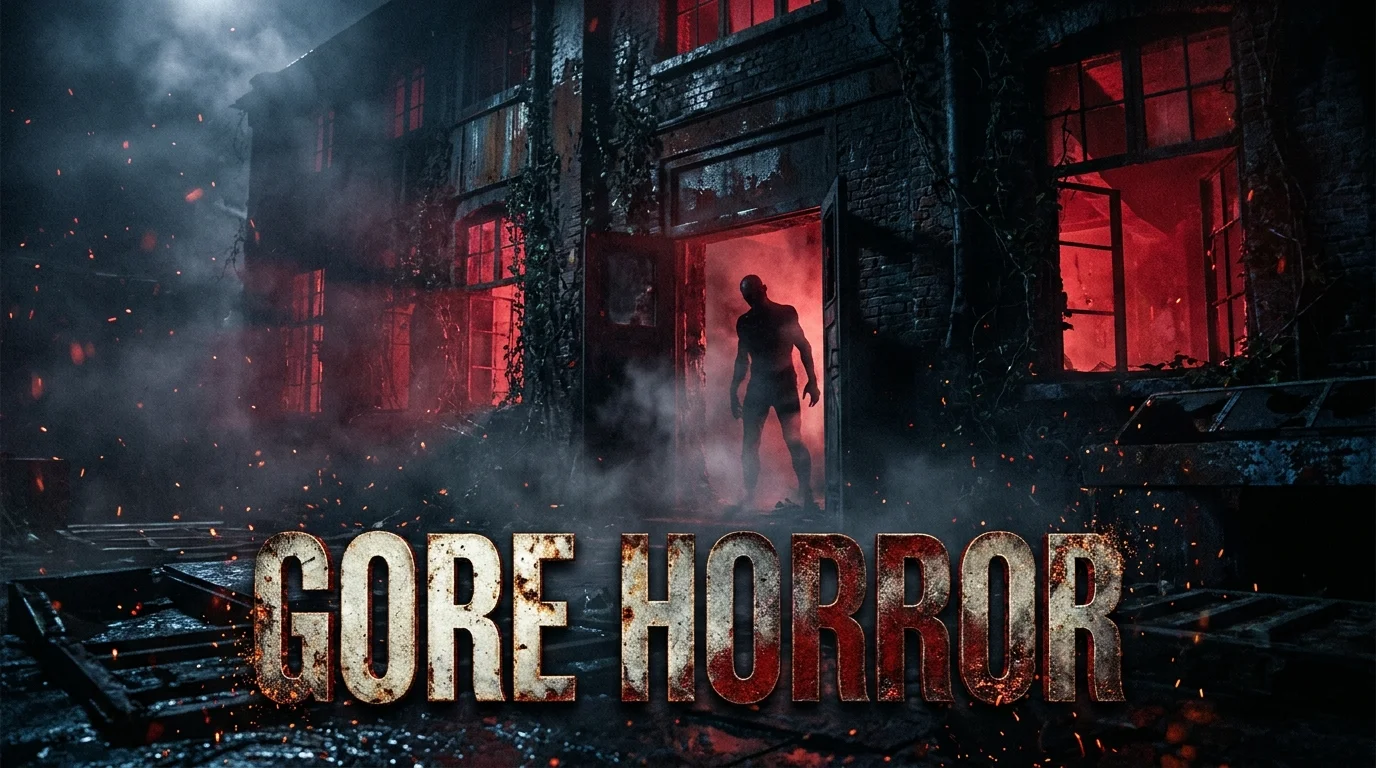
Gore horror puts graphic violence, bodily injury, and exaggerated bloodshed directly on screen. Unlike psychological horror, it rarely depends on leaving the worst events unseen. The style aims to trigger shock, disgust, tension, or dark amusement through visible physical consequences.
Direct answer: Gore horror is a horror style built around explicit bloodshed, injuries, mutilation, and physical destruction. It overlaps with splatter, slasher, body horror, and extreme cinema. The violence may create fear, disgust, dark comedy, or fascination, depending on the filmmaker’s goals and the viewer’s tolerance.
| Key fact | What it means |
|---|---|
| Main focus | Graphic violence and visible bodily damage |
| Common alternate term | Splatter horror |
| Typical effects | Blood, wounds, prosthetics, makeup, practical effects, CGI |
| Related styles | Slasher, body horror, zombie films, torture-focused horror |
| Early U.S. milestone | Blood Feast (1963) |
| Viewer response | Shock, disgust, excitement, curiosity, or avoidance |
| U.S. ratings | Strong graphic violence commonly receives restrictive ratings |
| Best suited for | Adult viewers comfortable with explicit fictional violence |
Key Takeaways
- Graphic violence is central rather than incidental.
- Splatter films often exaggerate physical destruction beyond realistic levels.
- Practical makeup effects remain important to the style’s identity.
- American filmmakers helped establish the modern form during the 1960s.
- Some viewers enjoy the controlled fear, effects work, or taboo-breaking spectacle.
- Content warnings matter because tolerance for graphic imagery varies widely.
What Is Gore Horror?
Gore horror emphasizes the physical results of violence instead of hiding them. Blood, open wounds, dismemberment, transformation, and damaged bodies may receive extended screen time. The imagery often becomes an important part of the movie’s identity.
That approach separates it from horror based mainly on implication or atmosphere. A psychological film may make viewers imagine an unseen act behind a closed door. A splatter film is more likely to show its fictional consequences.
The category also overlaps with several neighboring horror styles. Slasher movies can contain graphic violence without making it their primary attraction. Body horror focuses more specifically on disturbing changes to the human body.
Zombie movies often use similar imagery because damaged bodies are central to their stories. Torture-focused films may also share the same visual vocabulary. These categories overlap, but they are not automatically interchangeable.
Where Did Graphic Horror Movies Come From?
Film violence existed long before modern splatter cinema took shape. Earlier productions usually faced technical, cultural, and censorship limits on what audiences could see. Filmmakers often suggested severe injuries rather than displaying them in close detail.
A major American turning point arrived with Herschell Gordon Lewis’s Blood Feast in 1963. The British Film Institute describes Lewis as an important pioneer of the modern splatter film. His work deliberately showed bloodshed that mainstream movies usually avoided.
The American Film Institute also connects Blood Feast with the emerging “gore” and “splatter” labels. Its producers saw graphic horror as a market that major studios had not fully entered. That strategy helped establish a recognizable exploitation-film niche.
George A. Romero pushed American horror in another direction with Night of the Living Dead in 1968. The film helped move screen horror toward contemporary settings and harsher physical imagery. Its influence became especially visible in later zombie cinema.
By the 1970s and 1980s, practical effects became major attractions for horror audiences. Makeup artists created increasingly elaborate injuries, creatures, transformations, and death scenes. Effects craftsmanship became part of the entertainment instead of remaining invisible.
What Makes Gore Horror Different From Other Horror?
The clearest difference is how much the camera allows viewers to see. Many scary movies build fear before violence occurs, then cut away at the critical moment. Graphic horror often treats that moment as the centerpiece.
The effect is not always meant to feel realistic. Some movies push bloodshed so far that the result becomes exaggerated or comic. That approach is sometimes called “splatstick” because splatter effects mix with the physical comedy seen in Chris Farley movies.
Other films aim for the opposite response. They use convincing makeup, sound, editing, and restrained performances to make fictional injuries feel uncomfortable. The audience may know everything is fabricated while still reacting physically.
That difference explains why two blood-heavy movies can create completely different experiences. One can feel playful and absurd, while another feels grim and confrontational. The quantity of blood alone does not determine the tone.
Practical Effects Versus Digital Effects
Practical effects use physical materials created for the camera. Artists may build prosthetics, appliances, artificial wounds, mechanical props, or stage-blood systems. Actors can interact with those objects directly during filming.
This method remains popular among horror fans because physical objects occupy real space. Lighting naturally falls across the effect, and performers can respond to something tangible. Small imperfections can also make a scene feel less polished and more unpredictable.
Digital effects offer filmmakers different advantages. Computer-generated imagery can create movements or injuries that are difficult to perform safely. It can also remove equipment, extend practical effects, or combine several techniques.
Many modern productions mix both approaches. Practical makeup may provide the base image while digital work adjusts movement or removes visible rigging. The strongest technique depends on the scene rather than one universal rule.
Why Do People Enjoy Extremely Bloody Horror Movies?
Enjoying fictional violence does not mean someone enjoys real suffering. Horror gives viewers a controlled environment where danger exists without creating the same real-world threat. That distance can change fear into excitement or curiosity.
Some viewers are especially interested in craftsmanship. They watch a scene while thinking about makeup, prosthetics, editing, sound design, and performance. A convincing effect becomes similar to an elaborate movie illusion.
Others enjoy testing their own tolerance. The movie creates a safe challenge where viewers can decide whether to look away. Finishing an intense scene can create a sense of relief afterward.
Horror historian David J. Skal has also discussed horror as a way audiences process uncomfortable fears. That explanation does not apply equally to every viewer. It helps explain why frightening entertainment can feel appealing instead of purely unpleasant.
Gore, Splatter, Slashers, and Body Horror Compared
These labels often appear together, but each emphasizes something different. Understanding those differences helps viewers choose movies closer to their preferences. It also prevents every violent horror movie from receiving the same label.
| Style | Main emphasis | Graphic violence level | Typical source of fear |
|---|---|---|---|
| Splatter | Explicit physical destruction | High | Visible bodily harm |
| Slasher | Killer pursuing victims | Medium to high | Stalking and attacks |
| Body horror | Transformation or corruption | Varies | Loss of bodily control |
| Psychological horror | Mental instability or dread | Low to medium | Uncertainty and fear |
| Zombie horror | Undead threats and survival | Medium to high | Infection, death, collapse |
A slasher can be graphic, but its main structure usually involves pursuit and repeated attacks. Body horror may feature little traditional blood while still showing disturbing physical change. Psychological horror can become deeply unsettling without displaying extensive injuries.
The categories therefore describe emphasis rather than rigid boundaries. A single movie can combine several of them. Genre labels are most useful when they help viewers understand the experience before watching.
How U.S. Movie Ratings Treat Graphic Violence
American ratings consider the intensity and detail of screen violence. The Motion Picture Association’s ratings guidance distinguishes stronger violence partly through visible injuries and graphic detail. Bloodshed, torture, dismemberment, and similar imagery can contribute to restrictive ratings.
Context also matters during classification. A brief violent event differs from prolonged or highly detailed imagery. Tone, realism, frequency, and other content can affect the final rating.
That makes the rating a useful first screening tool for viewers. It cannot describe every disturbing scene or individual trigger. Parents and sensitive viewers may still want detailed content information before choosing a movie.
Streaming platforms also display their own warnings and maturity labels. Those descriptions may mention violence, disturbing imagery, or bloody content. Checking them beforehand can prevent an unpleasant surprise.
How to Decide Whether a Graphic Horror Movie Is Right for You
Start by checking the movie’s rating and content warnings. Look specifically for terms describing graphic violence, torture, bodily injury, or disturbing images. General labels such as “horror” may not reveal the intensity.
You can also consider which type of imagery bothers you most. Some viewers tolerate unrealistic blood but dislike realistic injuries. Others dislike transformation scenes while having no problem with standard slasher violence.
Context makes another major difference. Comedy can make exaggerated violence easier for some audiences to handle. A serious film using realistic sound and close-up photography may feel much stronger.
There is no benefit in forcing yourself through content you dislike. Horror entertainment should still function as entertainment for its intended viewer. Choosing a different subgenre can provide suspense without the same visual intensity.
Why Graphic Effects Still Matter to Horror
Physical effects give filmmakers a direct way to communicate vulnerability. A damaged body immediately shows the consequences of danger without requiring lengthy explanation. That visual information can intensify a scene within seconds.
The technique can also serve storytelling rather than shock alone. Transformation may reveal a character losing control over their identity or humanity. An exaggerated death can signal that a movie wants laughter rather than realism.
Problems arise when violence becomes repetitive without supporting the story or tone. Shock loses impact when every scene tries to exceed the previous one. Strong filmmaking usually gives the imagery a clear dramatic purpose.
That balance explains why certain effects-heavy movies remain influential for decades. Viewers remember more than the quantity of artificial blood. They remember timing, invention, performance, and the ideas surrounding the spectacle.
Frequently Asked Questions About Gore Horror
Is gore horror the same as splatter horror?
The terms are often used interchangeably. Both usually describe horror that prominently displays graphic bloodshed and bodily injury. Individual writers may use “splatter” more specifically for exaggerated effects-driven movies.
Is every slasher movie considered gore horror?
No, because slasher films are defined mainly by their killer-and-victim structure. Some slashers contain extensive graphic violence, while others show surprisingly little. A movie can belong to both categories when both elements are prominent.
Why do people like graphic horror?
People have different reasons, including excitement, curiosity, controlled fear, and appreciation for special effects. Some enjoy the exaggerated theatrical quality rather than realistic violence. Personal sensitivity to disgust also affects the experience.
What was an early American splatter movie?
Blood Feast, released in 1963 and directed by Herschell Gordon Lewis, is widely associated with the birth of modern splatter cinema. Film institutions including BFI and AFI recognize its historical importance. Its explicit effects separated it from much mainstream horror of its period.
Are these movies always frightening?
No, because graphic imagery can produce several reactions besides fear. Some movies aim for disgust, dark humor, astonishment, or deliberate excess. A viewer may find an effects-heavy scene impressive without finding it frightening.
Are graphic horror movies suitable for children?
Many are intended for mature audiences because they contain explicit fictional violence and disturbing imagery. Parents should check ratings and specific content descriptions before allowing younger viewers to watch. Individual maturity and sensitivity also differ.
Final Thoughts
Graphic horror occupies a distinctive place in American film history. Its defining feature is not simply violence, but the decision to make bodily consequences visible. That choice can create disgust, suspense, comedy, fascination, or several reactions at once.
The strongest examples use effects as part of storytelling rather than decoration. They combine technical craft with tone, pacing, and character stakes. Viewers who understand those differences can choose titles that match their own limits.
If blood-heavy movies are not appealing, horror offers many alternatives. Psychological, supernatural, mystery, and atmospheric films can generate fear with far less explicit imagery. Explore more of FJREO’s entertainment coverage to find more movies and pop-culture topics suited to your interests.