
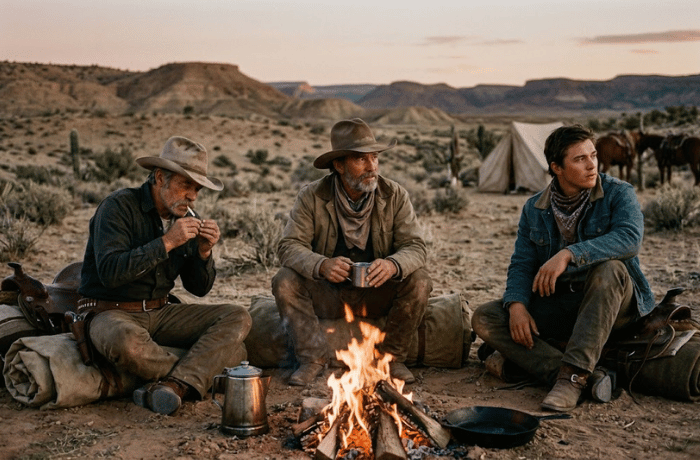
The best western movies of all time combine unforgettable characters, striking landscapes, moral conflict, and tension that still works decades later. Our top recommendation is The Searchers, followed closely by The Good, the Bad and the Ugly and Unforgiven. Together, these films show how widely the genre can stretch.
AFI voters ranked The Searchers first among American Westerns in AFI’s Top 10 survey. Modern critics also continue championing Sergio Leone, Clint Eastwood, John Ford, and other filmmakers who reshaped the genre. This ranking is guided by that combination of critical respect, influence, and lasting watchability.
Direct answer: Start with The Searchers for classic Hollywood filmmaking, The Good, the Bad and the Ugly for a Spaghetti Western, and Unforgiven for a darker modern interpretation. Those three films offer an excellent introduction to the genre’s style, mythology, action, and changing ideas about heroism.
| Rank | Movie | Year | Director | Best for |
|---|---|---|---|---|
| 1 | The Searchers | 1956 | John Ford | Classic Western storytelling |
| 2 | The Good, the Bad and the Ugly | 1966 | Sergio Leone | Spaghetti Western newcomers |
| 3 | Unforgiven | 1992 | Clint Eastwood | Dark revisionist drama |
| 4 | Once Upon a Time in the West | 1968 | Sergio Leone | Epic filmmaking |
| 5 | High Noon | 1952 | Fred Zinnemann | Suspense and moral conflict |
| 6 | The Wild Bunch | 1969 | Sam Peckinpah | Gritty action |
| 7 | Stagecoach | 1939 | John Ford | Genre history |
| 8 | Shane | 1953 | George Stevens | Emotional frontier drama |
| 9 | Butch Cassidy and the Sundance Kid | 1969 | George Roy Hill | Humor and chemistry |
| 10 | The Treasure of the Sierra Madre | 1948 | John Huston | Greed and psychological tension |
| 11 | Rio Bravo | 1959 | Howard Hawks | Character-driven entertainment |
| 12 | A Fistful of Dollars | 1964 | Sergio Leone | Lean, stylish action |
| 13 | Red River | 1948 | Howard Hawks | Cattle-drive drama |
| 14 | The Man Who Shot Liberty Valance | 1962 | John Ford | Myth versus history |
| 15 | True Grit | 2010 | Joel and Ethan Coen | Modern traditionalism |
How We Ranked the Best Western Movies of All Time
This ranking balances historical influence, critical reputation, storytelling, performances, filmmaking craft, and modern watchability. No single score can settle a genre with more than a century of history. A useful list must represent several eras and filmmaking traditions. Readers who enjoy lists like this can find more in FJREO’s entertainment coverage.
AFI’s Western ranking provides an important American perspective, especially for Ford, Hawks, and Zinnemann. The Library of Congress also preserves titles including The Searchers, High Noon, and Shane in the National Film Registry. Their inclusion reflects enduring cultural and historical importance.
Our ranking also recognizes international influence. Sergio Leone transformed familiar American imagery through Italian filmmaking and Ennio Morricone’s music. BFI writers continue treating Once Upon a Time in the West as a landmark of the genre.
1. The Searchers (1956)
John Ford’s The Searchers follows Ethan Edwards during a years-long mission across the American frontier. John Wayne delivers one of his most complex performances as an obsessive former Confederate soldier. The film constantly questions whether its apparent hero can overcome his hatred.
Its Monument Valley photography helped define the visual language audiences associate with the American West. Yet the story is far less comfortable than its beautiful scenery suggests. Ethan’s racism and violence give the film a troubling psychological depth.
AFI named it the greatest American Western in its genre survey. The Library of Congress added it to the National Film Registry in 1989. Those honors help explain why it remains our first recommendation.
Pros: extraordinary photography, complex lead character, enormous historical influence.
Cons: racial attitudes require historical context, and the deliberate pacing may challenge some viewers.
2. The Good, the Bad and the Ugly (1966)
Sergio Leone turned a treasure hunt into one of cinema’s defining exercises in style. Clint Eastwood, Lee Van Cleef, and Eli Wallach pursue buried gold during the American Civil War. Their shifting alliances keep nearly three hours of storytelling surprisingly tense.
Leone favors giant close-ups, wide landscapes, long pauses, and sudden violence. Ennio Morricone’s score is equally important to the movie’s identity. Few soundtracks are so immediately recognizable.
This is the strongest starting point for viewers curious about Spaghetti Western filmmaking. Its scale feels epic without losing the pleasures of a ruthless adventure. IMDb audience lists also place it consistently among highly rated genre favorites.
Pros: iconic score, memorable characters, spectacular final act.
Cons: long running time and intentionally exaggerated style.
3. Unforgiven (1992)
Unforgiven examines what happens after the stories about legendary gunfighters stop being romantic. Clint Eastwood plays William Munny, a former killer pulled back into violence. Gene Hackman and Morgan Freeman give equally important performances.
The film treats killing as frightening, ugly, and morally damaging. That approach deliberately challenges many heroic traditions associated with earlier genre classics. Its characters still want legends, but reality refuses to cooperate.
The Academy named Unforgiven Best Picture at the 1993 Oscars. Eastwood also used the film to reconsider the violent screen persona that helped make him famous. It remains one of the strongest revisionist entries for modern viewers.
Pros: mature themes, outstanding performances, powerful ending.
Cons: deliberately bleak tone and less traditional adventure.
4. Once Upon a Time in the West (1968)
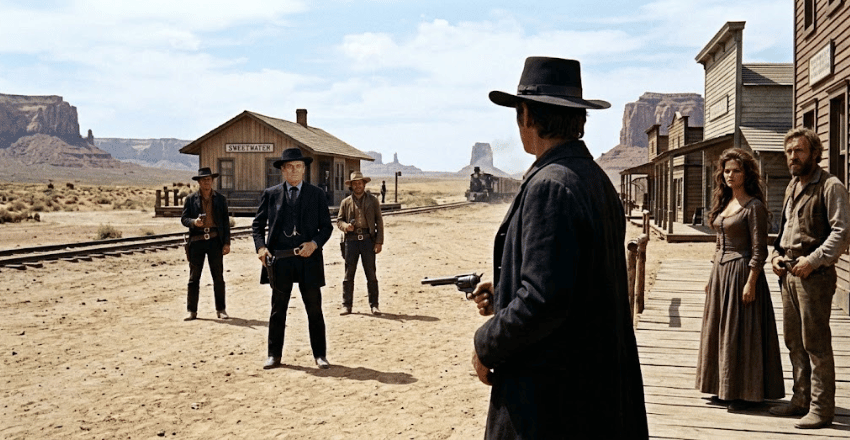
Leone expanded his visual style into something grander with Once Upon a Time in the West. Charles Bronson, Henry Fonda, Claudia Cardinale, and Jason Robards lead its carefully constructed story. Railroads, land ownership, revenge, and disappearing frontier mythology all intersect.
Casting Henry Fonda gives the film one of its sharpest surprises. Leone takes an actor strongly associated with decency and makes him threatening. The choice reinforces the movie’s habit of overturning familiar expectations.
BFI has described the picture as Leone’s masterpiece and one of the genre’s greatest achievements. Its 1968 release also bridges classical Hollywood imagery and a more self-aware era of filmmaking.
Pros: gorgeous compositions, exceptional music, unforgettable villain.
Cons: a slow opening and a lengthy runtime.
5. High Noon (1952)
High Noon builds its entire story around an approaching train and an abandoned lawman. Gary Cooper plays Marshal Will Kane, who learns that dangerous outlaws are returning. He searches for help while the town gradually refuses him.
The movie’s near-real-time structure gives every conversation a sense of urgency. Clocks appear repeatedly as Kane’s options disappear. That simplicity turns moral responsibility into genuine suspense.
The Library of Congress selected the film for its National Film Registry in the program’s first year. Its central question remains direct and effective: what should one person do when everyone else walks away?
Pros: tight pacing, strong moral conflict, accessible running time.
Cons: viewers seeking large-scale action may find it restrained.
6. The Wild Bunch (1969)
Sam Peckinpah’s The Wild Bunch follows aging outlaws who realize their era is disappearing. The story unfolds as technology and political change begin to replace familiar frontier rules. That sense of approaching extinction shapes every violent decision.
Its action shocked audiences in 1969. Peckinpah used editing and slow motion to make gunfights feel chaotic rather than clean. Later filmmakers borrowed heavily from that visual language.
The movie works best for viewers comfortable with grim characters and graphic violence. It is less romantic than many earlier classics. Its reputation rests partly on how aggressively it challenged them.
Pros: influential action filmmaking, strong ensemble, clear themes.
Cons: graphic violence and cynical characters.
7. Stagecoach (1939)
Stagecoach helped restore prestige to a genre that had often been treated as routine entertainment. John Ford places strangers together on a dangerous journey through Monument Valley. Their conflicts reveal class prejudice, fear, courage, and unexpected loyalty.
The movie also helped establish John Wayne as a major star. His entrance as the Ringo Kid remains one of Ford’s most celebrated character introductions. BFI recommends the film as an ideal starting point for exploring Ford’s career.
Its influence becomes clearer after watching later frontier stories. The basic structure has been copied across action, science-fiction, and road movies. Few early examples remain this easy to recognize.
Pros: historical importance, efficient storytelling, memorable ensemble.
Cons: some cultural portrayals reflect outdated Hollywood conventions.
8. Shane (1953)
George Stevens frames Shane through a child’s admiration for a mysterious gunfighter. Alan Ladd’s character joins homesteaders threatened by a powerful rancher. He protects them while also bringing danger into their peaceful household.
The movie is particularly effective because heroism carries a cost. Shane can protect the family, but his violent abilities also separate him from their future. That tension gives the famous ending its emotional weight.
The Library of Congress selected Shane for the National Film Registry in 1993. Its description highlights the expansive photography and the contrast between Ladd’s warmth and mystery.
Pros: emotional story, striking scenery, accessible central conflict.
Cons: slower rhythm than modern action films.
9. Butch Cassidy and the Sundance Kid (1969)
Paul Newman and Robert Redford give this outlaw story its extraordinary charm. Their characters joke, argue, improvise, and run as the modern world closes around them. Katharine Ross adds warmth without becoming a simple romantic accessory.
George Roy Hill mixes comedy with an increasingly melancholy sense of time running out. That balance sets it apart from harder-edged entries released during the same period. Its famous chemistry makes it especially friendly for newcomers.
Choose this film if traditional frontier stories often feel too solemn. It still addresses change, mortality, and myth. It simply reaches those themes with more wit.
Pros: great chemistry, memorable dialogue, approachable tone.
Cons: tonal shifts may bother viewers who want a traditional, shootout-driven story.
10. The Treasure of the Sierra Madre (1948)
John Huston’s film trades heroic lawmen for desperate prospectors searching for gold in Mexico. Humphrey Bogart plays Fred C. Dobbs, whose suspicion grows with every sign of success. Wealth becomes more dangerous than poverty.
The movie’s greatest strength is psychological tension. There is action, but greed creates the real threat. Dobbs slowly destroys the trust that could have protected him.
That makes the film an excellent choice for viewers who prefer character drama. It expands the genre beyond cowboys and gunfights. IMDb users also repeatedly include it near the top of Western-focused lists.
Pros: superb character study, sharp dialogue, lasting themes.
Cons: less conventional frontier action than other picks.
Five More Essential Picks
11. Rio Bravo (1959) pairs John Wayne with Dean Martin in Howard Hawks’s relaxed siege story. Friendship matters as much as gunplay here. The film is ideal for viewers who prefer character chemistry.
12. A Fistful of Dollars (1964) introduced many international audiences to Eastwood’s mysterious gunslinger persona. Leone borrowed a clever rival-gangs structure for a lean story. It remains an easy entry into his style.
13. Red River (1948) turns a cattle drive into a clash between John Wayne and Montgomery Clift. Their conflict combines family drama with large-scale frontier filmmaking. It proves a trail story can feel psychologically intense.
14. The Man Who Shot Liberty Valance (1962) asks whether societies prefer comforting legends over complicated truth. James Stewart and John Wayne represent competing versions of American heroism. Ford’s late film feels increasingly reflective.
15. True Grit (2010) gives the traditional revenge story a modern filmmaking polish. Jeff Bridges, Hailee Steinfeld, and Matt Damon make an unusual traveling trio. The Coen brothers respect genre traditions without copying older movies.
Which Western Should You Watch First?
Choose The Searchers if you want the strongest introduction to classic American frontier filmmaking. Choose The Good, the Bad and the Ugly if atmosphere, music, and stylized action matter more. Pick Unforgiven if you prefer morally complicated modern drama.
For something lighter, start with Butch Cassidy and the Sundance Kid. For tight suspense, watch High Noon. Anyone wanting pure visual grandeur should move Once Upon a Time in the West near the top.
After finishing this list, FJREO readers can keep browsing the site’s broader entertainment coverage. The section covers film, music, performers, and popular culture. It offers an easy next stop for readers looking for more screen-related features.
What Makes a Great Western?
The strongest examples use the frontier as more than a scenic backdrop. They examine law, violence, community, greed, loyalty, race, expansion, and personal freedom. Different generations interpret those ideas very differently.
Classic directors often focused on building communities and maintaining order. Later filmmakers became more skeptical about the violence behind those communities. Revisionist stories frequently challenge the heroic myths established by earlier pictures.
That evolution explains why the genre remains worth exploring. A 1939 Ford film and a 1992 Eastwood film can use similar imagery in different ways. Watching them together turns entertainment into a miniature history of American filmmaking.
Readers interested in screen performers can also visit FJREO’s Tracy Reiner career profile. Music fans can explore its Ariana Grande and Michael Jackson feature. Both are part of the site’s growing entertainment library.
Frequently Asked Questions
What are the best western movies of all time for beginners?
Start with The Searchers, The Good, the Bad and the Ugly, Unforgiven, High Noon, and Butch Cassidy and the Sundance Kid. Those choices cover classic Hollywood, Italian filmmaking, revisionism, suspense, and comedy. They also provide enough variety to reveal which style you prefer.
What is considered the greatest American Western?
AFI ranks The Searchers first in its Western category. More than 1,500 filmmakers, critics, historians, and other creative professionals participated in AFI’s 10 Top 10 voting process. Different publications use different criteria, so no ranking is universally final.
What is the best Clint Eastwood Western?
Unforgiven is the strongest choice for viewers seeking Eastwood’s most acclaimed work in the genre. The film won Best Picture at the 1993 Academy Awards. Fans wanting his earlier gunslinger persona should begin with Leone’s Dollars trilogy instead.
What is the best Sergio Leone Western?
Once Upon a Time in the West and The Good, the Bad and the Ugly are the leading choices. The former is grander and more reflective, while the latter is faster and more immediately entertaining. BFI has specifically called Once Upon a Time in the West Leone’s masterpiece.
Are modern Westerns worth watching?
Yes, because later filmmakers use familiar frontier ideas to question older myths. Unforgiven remains a key example of this approach. Modern productions can preserve the genre’s tension without copying its earlier assumptions.
Final Verdict
The Searchers takes our top position because its filmmaking influence remains enormous. It also contains enough moral tension to reward discussion after the credits. Few classics combine visual beauty and uncomfortable character complexity as effectively.
Still, no single selection captures everything the genre offers. Leone provides style, Peckinpah supplies brutal revisionism, and Eastwood questions the mythology he once embodied. The strongest viewing plan is to sample several eras rather than stop with one celebrated title.
Start with the top three, then follow whichever style interests you most. Those films lead naturally toward Ford, Hawks, Peckinpah, and later revisionist directors. FJREO’s entertainment section can then help you continue exploring film and popular culture.